


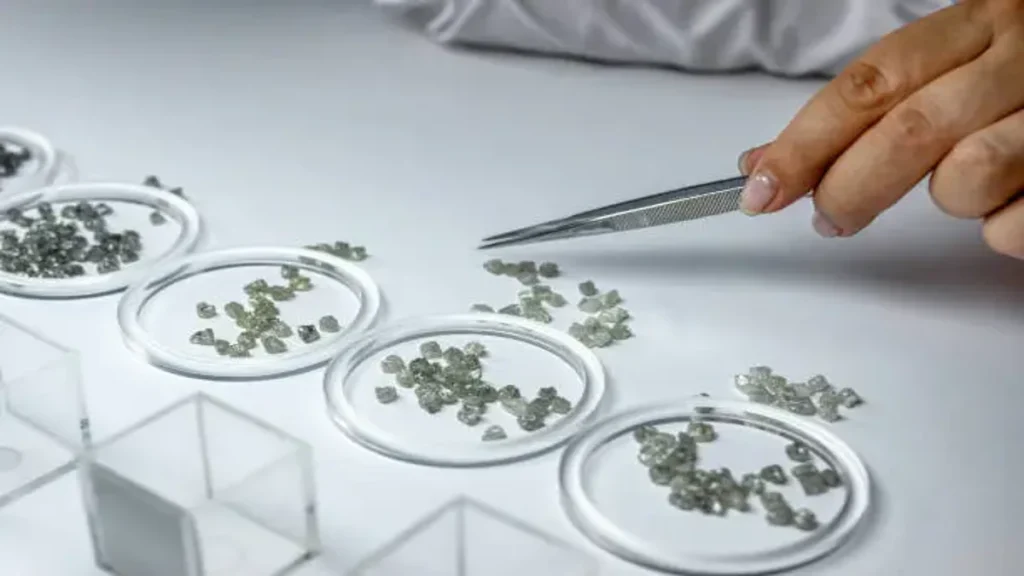
The jewelry industry is undergoing a transformation that would have seemed impossible just a decade ago. As consumers increasingly prioritize sustainability and ethical sourcing, traditional notions of luxury are being redefined. At the center of this shift sits a technology that’s both scientifically sophisticated and surprisingly straightforward: laboratory-grown diamonds.
These aren’t imitation stones or synthetic substitutes in the conventional sense. Lab-grown diamonds possess identical chemical, physical, and optical properties to mined diamonds. They’re formed through the same carbon crystallization process, just accelerated and controlled within a laboratory environment. For an industry built on centuries of tradition, this represents not just innovation but evolution.
The Science Behind the Sparkle
Creating diamonds in a laboratory involves replicating the extreme conditions found deep within the Earth’s mantle. Two primary methods dominate the field: High Pressure High Temperature (HPHT) and Chemical Vapor Deposition (CVD). Both processes start with a diamond seed—a tiny fragment of diamond crystal—and build upon it atom by atom.
The HPHT method subjects carbon to pressures exceeding 1.5 million pounds per square inch and temperatures around 1,500 degrees Celsius. The CVD process, increasingly favored for gem-quality stones, uses a sealed chamber filled with carbon-rich gas. When heated to extreme temperatures, the gas molecules break apart, and pure carbon attaches to the diamond seed in crystalline form.
What makes this technology remarkable isn’t just its ability to create diamonds, but the precision it enables. Laboratory conditions allow for control over variables that nature leaves to chance. The result is diamonds that can meet specific requirements for size, clarity, and color with consistency that mining operations cannot guarantee.
The growth period varies depending on the desired size and method, ranging from a few weeks to several months. This timeline—dramatically shorter than the billions of years required for natural formation—doesn’t compromise quality. Independent gemological laboratories confirm that lab-grown diamonds are indistinguishable from mined stones without specialized equipment.
Environmental and Ethical Advantages
Traditional diamond mining carries significant environmental costs. A single carat can require moving up to 250 tons of earth, creating landscape disruption that persists for generations. Water consumption, energy expenditure, and habitat destruction compound the impact. Mining operations in certain regions have also been linked to labor concerns and conflict financing, issues that have plagued the industry despite certification efforts.
Lab-grown diamonds offer a measurably different footprint. While production still requires energy, facilities increasingly utilize renewable sources, and the overall carbon emissions per carat are substantially lower. Water usage drops dramatically, and the landscape disruption is eliminated entirely. There are no mining communities to displace, no ecosystems to fragment, no questions about whether a stone’s journey involved exploitation.
For consumers and businesses navigating ESG commitments, these distinctions matter. Corporate buyers particularly appreciate the simplified due diligence: laboratory production creates transparent, traceable supply chains from creation to consumer. This transparency extends beyond environmental metrics to encompass labor conditions, energy sources, and long-term sustainability practices.
The ethical clarity doesn’t diminish the luxury experience—it enhances it. Modern consumers, particularly millennials and Gen Z, actively seek products that align with their values. Research indicates that over 70% of younger luxury buyers consider sustainability essential, not optional. Lab-grown diamonds meet this demand without requiring compromises on beauty, durability, or investment value.
Design Innovation and Market Applications
The predictability and availability of lab-grown diamonds are unlocking new creative possibilities. Designers who once had to work within the constraints of available mined inventory can now commission specific stones to match their vision. Larger stones become economically feasible, unusual cuts less risky, experimental settings more accessible.
This freedom particularly benefits independent designers and smaller brands that lack the purchasing power to secure premium natural stones. The democratization of access doesn’t lower standards—it raises opportunities. High-quality diamonds become available to create statement pieces, fashion jewelry, and accessible luxury items that would have been economically impossible with traditional sourcing.
The B2B sector has responded enthusiastically. Jewelers report that lab-grown options allow them to serve diverse customer bases with varied price points while maintaining quality standards. Wholesale buyers appreciate the inventory predictability and stable pricing, which simplifies business planning and reduces financial risk associated with commodity price fluctuations.
Companies like Labrilliante are demonstrating how technology and craftsmanship can coexist, producing diamonds that meet rigorous quality standards while advancing sustainable practices. To explore how innovation is shaping the industry, click here to learn more about the intersection of technology and traditional jewelry excellence.
Looking Ahead: The Diamond Industry’s Evolution
The future of lab-grown diamonds extends beyond simply replacing mined stones. As production technology advances, new applications emerge. Industrial uses for diamond’s exceptional hardness and thermal conductivity continue expanding. Technological applications in electronics and quantum computing are being explored. Even architectural elements incorporating diamonds are being researched.
Within jewelry, the trajectory points toward continued growth. Market analysts project that lab-grown diamonds will capture an increasingly significant share of the jewelry market over the next decade. This growth doesn’t necessarily spell decline for natural diamond mining—rather, it suggests a diversifying market where different products serve different preferences and values.
The distinction between “lab-grown” and “natural” may eventually become as unremarkable as the difference between farm-grown and wild-caught fish—both valid, both valuable, chosen based on individual priorities rather than assumptions about legitimacy.
What’s clear is that the conversation has shifted. The question is no longer whether laboratory diamonds are “real”—gemologically, they undeniably are. The question is how the industry adapts to accommodate both traditional and innovative approaches, how consumers navigate expanded choices, and how technology continues reshaping what we consider valuable.
The diamond industry’s future looks different than its past. That difference, increasingly, looks like progress.