


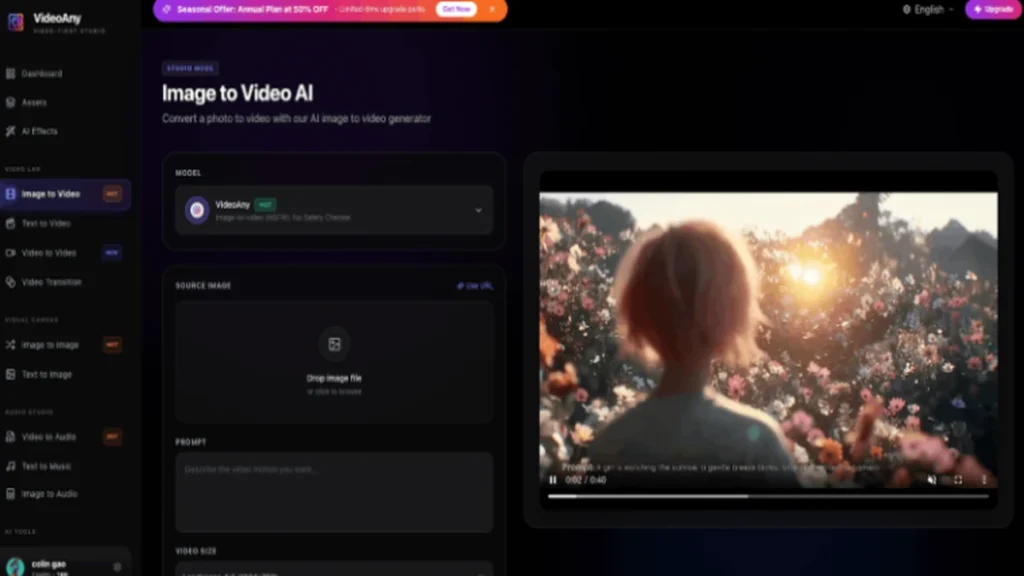
If you want to turn weekly creative into a repeatable process, start by building a small library of testable building blocks you can recombine, measure, and improve. In practice, many teams generate the first set of shot blocks with the AI Video Generator so iteration starts immediately instead of getting stuck in planning.
1) Build ads as shot blocks, not as one long masterpiece
Most underperforming ads fail for one of two reasons: the hook doesn’t stop the scroll, or the message gets fuzzy in the middle. Treat your ad like a modular system:
- – Hook (1–2s): a result, a contrast, or a bold claim
- – Problem (2–4s): the pain the viewer recognizes
- – Solution (3–6s): what you’re offering and how it works
- – Proof (2–4s): data, reviews, comparison, or demonstration
- – CTA (1–2s): the next action (click, try, buy)
When you generate and edit these segments separately, iteration becomes cheap. If your drop-off spikes at second three, you replace the hook block—not the entire video.
2) Use a simple test matrix to avoid “random creativity”
Growth teams often waste time because every version changes too many things. A practical 3×3 matrix keeps learning clean:
- – Pace: fast / medium / slow
- – Angle: price / benefit / use-case
Lock everything else: font, subtitle placement, brand colors, framing, and CTA style. You’ll get nine variants you can actually compare.
3) Write prompts like production instructions
For each block, specify only what matters:
- – Camera: locked, slow push-in, gentle pan
- – Subject action: unboxing, showing texture, pointing to feature
- – Constraints: stable, minimal motion, no warping, clear text
Then iterate by changing one variable at a time. This produces cleaner improvements than rewriting the whole prompt.
4) Add a 60-second QA step before shipping
“Clean and consistent” often beats “flashy and unstable,” especially for paid traffic. Quick checks:
- – Readability: can a mobile viewer understand the key line in one second?
- – Stability: no jitter, weird morphing, or distracting artifacts
- – Brand fit: colors, tone, and layout look like your other ads
- – Compliance: no exaggerated claims, no unintended trademarks in frame
5) Turn winners into templates
When a hook structure or visual rhythm works, save it. Your next campaign should start from proven blocks and only swap the offer and a single visual detail. That’s how generative video becomes a growth system instead of a one-off experiment.
A quick 10-minute production loop
1. Generate 3 hook options with identical layout and framing.
2. Generate 2 “show” options that demonstrate the product clearly.
3. Keep proof simple: one comparison or one review-style statement.
4. Export, assemble the best blocks, and add consistent subtitles.
5. Ship two variants by changing only pace (fast vs. medium).
What to measure (so you learn fast)
Track early hold (1–3 seconds), mid‑section drop-off, and click intent. If hold is weak, fix the hook. If people watch but don’t click, tighten proof and CTA. Treat every metric as an instruction for which block to regenerate next.
Over a few cycles, your “best blocks” become a default creative kit you can deploy whenever you launch a new offer.
If your workflow includes a product hero image, you can also create controlled motion variants with Image to Video AI and keep them consistent with your ad layout. And if you’re testing spokesperson-style creatives, finishing the same script with Lip Sync can make the delivery feel more believable without changing your core message.