


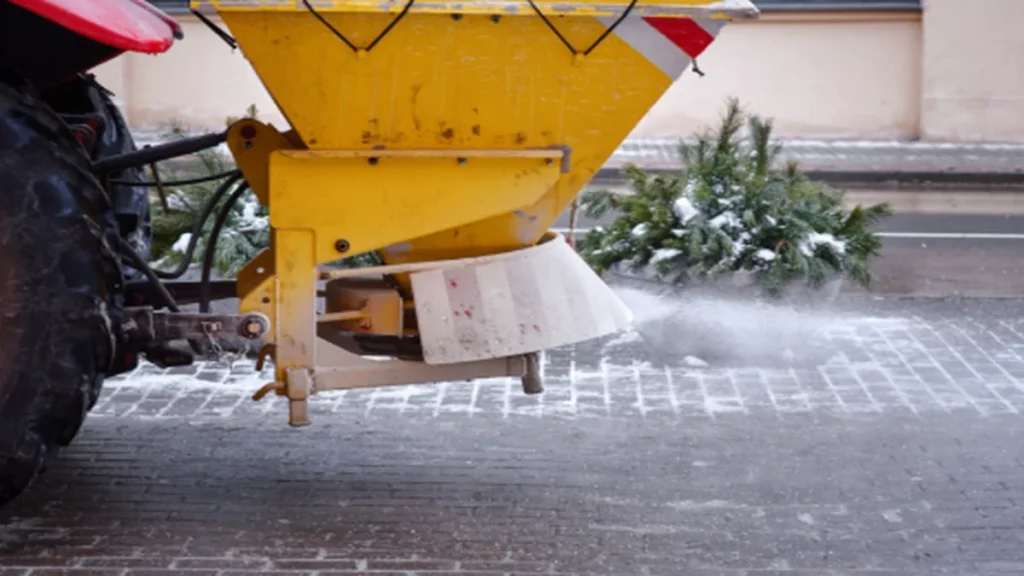
One of the most overlooked aspects of winter safety is microclimate variability within a single property. Two sidewalks ten meters apart can behave entirely differently under identical weather conditions—yet many service providers treat them the same.
This uniform approach is one of the leading causes of missed ice hazards.
The Impact of Shade and Solar Exposure
Sun exposure plays a critical role in winter surface conditions:
- South-facing walkways often warm and dry faster
- North-facing paths remain frozen for extended periods
- Shaded corridors refreeze earlier in the evening
- Buildings cast long winter shadows that shift throughout the day
A surface that appears safe at 3 p.m. may become hazardous by 6 p.m. once solar input disappears. Static service schedules fail to account for this dynamic risk.
Surface Materials Behave Differently
Material science matters in winter maintenance. For example:
- Concrete retains moisture longer than asphalt
- Pavers trap water between joints
- Metal stair nosings freeze rapidly
- Painted or sealed surfaces lose traction sooner
Advanced winter planning assigns risk weighting to these surfaces, ensuring higher-risk zones receive earlier or more frequent treatment.
Why Air Temperature Is Misleading
Air temperature readings—often taken several meters above ground—do not reflect surface conditions. Radiative cooling, wind exposure, and thermal mass cause pavement temperatures to diverge significantly from ambient air.
This explains why ice can form at +3°C air temperature and why relying solely on weather apps leads to delayed response.
Snow Removal Expert addresses this gap by analyzing multiple environmental inputs and applying blended intelligence rather than reacting to surface-level forecasts. Their methodology is outlined at https://www.snowremovalexpert.com.
Applying This Knowledge in Real Cities
In dense urban environments, microclimates are unavoidable. Buildings, traffic patterns, elevation changes, and surface diversity all compound risk.
This is why leading property managers prioritize snow removal services Vancouver that understand site-specific hazards rather than offering one-size-fits-all contracts.
Winter safety is no longer about clearing snow—it is about anticipating where ice will form next. Providers who understand shade dynamics, surface behavior, and microclimates are setting the new standard for responsible winter maintenance.