


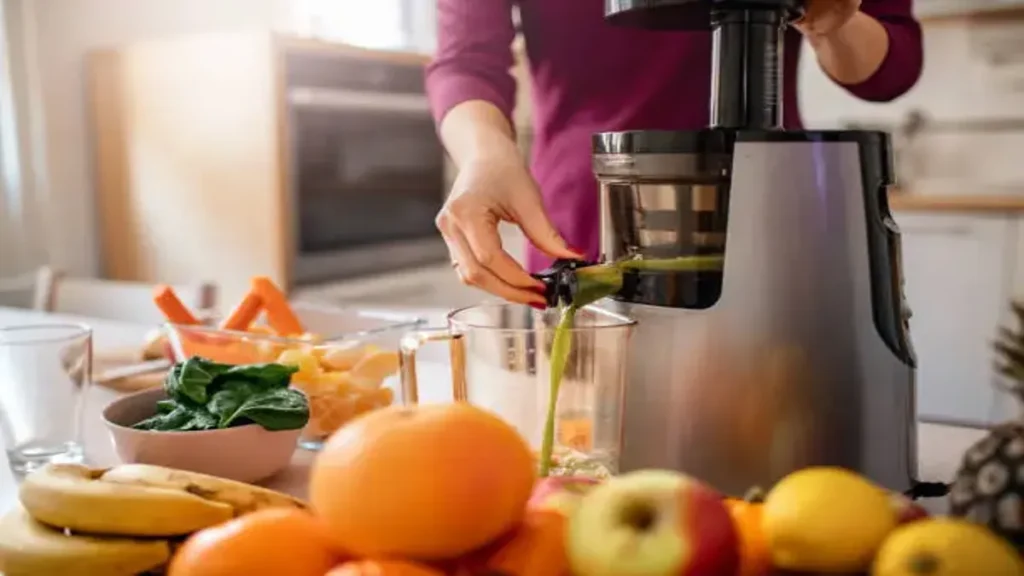
The thing about juicers? Everybody needs one.
Juices are a convenient yet enriching source of essential nutrients. As life gets busier and we run short on time for preparing elaborate, nutritious meals, we can count on juices to come to our rescue. Easy to extract, packed with nourishment, and quick to absorb, juices are often considered the new balanced diet.
They are delivered into the bloodstream.
Boost your immune system.
Strengthen your digestive tract.
What more could one possibly ask out of a meal? Moreover, it’s a staple source of nourishment for people living in extreme temperatures. It makes sense why they have begun to take up space in our daily lives. As juice blends get creative, the need for a juicer that extracts efficiently has become important. That’s where the slow RPM or cold press juicer steps in to support your clean eating habits.
What Is a Slow RPM Cold Press Juicer?
The slow RPM juicer, also known as a cold press juicer, has become popular due to its low operational speed. When produce like fruits/vegetables is fed into the juicer, the rotating auger or screw fitted into the device turns slowly to extract juice. This gentle extraction process ensures that no nutrients are lost to heat or oxidation.
What’s more? They save you time and nourishment. In comparison to traditional juicers, slow RPM (Revolutions Per Minute) juicers operate through a reduced number of revolutions. They prevent changes in the flavour of the juice and help it retain full nutritional value.
Superior Nutrient Retention With The Slow RPM Cold Press Juicer
Here’s how the cold press juicer aids in nutrient retention:
Efficient Crushing & Extraction
A cold press juicer grinds and draws out juice from fruits and vegetables through slow rotations of the auger. The steady movement of the auger ensures that the maximum amount of juice is extracted from the produce with minimal heat generation. Only a nutrient-drained pulp remains in the juicer to be cleared out.
Increased Juice Yield
Unlike centrifugal juicers that have high-speed spinning blades, a cold press juicer is highly efficient due to its steady rotational speed. It churns out juice from soft as well as hard fruits and vegetables. The slow and consistent extraction draws out a high quantity of nutrient-rich juice without losing anything to oxidation.
Preservation of Nutrients
A cold press juicer aids in superior nutrient retention. It operates noiselessly and at a steady pace. No heat is generated, and no valuable enzymes are destroyed as a result of the rise in temperature within the juicer. As natural enzymes remain active and preserved, the flavour and nutritional value of your juice are retained in a slow RPM juicer.
Longer Shelf Life
Oxidation is the primary factor that leads to slower shelf lives and reduced juice freshness. A cold press juicer operates through a slow extraction process. This kind of an extraction process, as mentioned, involves minimal to zero heat generation. Subsequently, no oxidation takes place. Therefore, you’re able to store your juices for longer periods of time. You can also expect them to retain their nutritional value despite being extracted hours before consumption.
Easy Maintenance
A slow RPM or cold press juicer is engineered differently from a centrifugal juicer. These modern-day devices, integrated with cold-press technology, are easy to take apart for maintenance. Pulp can be cleared out by using running water. Mesh filters can also be easily cleared of residue. Moreover, top-quality juicers tend to come with self-cleaning functions, too. All these factors help reduce the time and effort required in maintaining your juicers and enhance the benefits you gain from them.
Fit for regular and frequent use, they are able to keep up with your nutritional demands for years on end.
Difference Between Cold-Pressed Juicers and Regular Juicers
Here are the differences between cold press juicers and regular juicers to help with decision-making:
| Parameter | Slow RPM/Cold-Pressed Juicers | Regular Juicers |
| Speed & Efficiency of Extraction | Steady, consistent rotation with high efficiency of extraction | High-speed spinning blades lower the efficiency of extraction |
| Nutrient Retention | High nutrient retention, including enzymes and sensitive nutrients like Vitamin B-complex and Vitamin C | Low nutrient retention. It also adversely impacts the preservation of enzymes, as well as the additional nutrient content |
| Noise | Silent operation | Can be extremely noisy |
| Yield | High juice yield due to slow, steady extraction | Low juice yield due to high rotation speed |
| Heat Generation | Low to negligible heat generation or oxidation | High heat generation and oxidation that adversely impact the nutritional value of juices |
| Maintenance | Low maintenance and has high longevity | Can be high maintenance. Longevity depends on the quality of the juicer. |
Maintenance Tips For Your Slow RPM Juicer
A cold press juicer is a juicing marvel. Not only are they superior juicing partners, but they also require very little maintenance. Hippocrates or even the first nutritionist to hold a degree could’ve never imagined that juicers would be self-sufficient one day. However, that doesn’t mean you can’t partake in ensuring that your slow RPM juicer lasts long. Here are a few useful tips in that regard:
- Clear out the pulp and residue right after using the juicer
- Use soft tools to clean mesh filters and detached parts
- Use warm water to unclog stubborn residue
- Make sure to dry out the parts before reassembling them
- Periodic lubrication can keep the auger or rotating screw functioning properly
- Store in dry, clean places and avoid placing it on high shelves for safety reasons
Final Thoughts
For an incredibly long time, we’ve focused on efficiency and time pressures when it comes to juicers. While efficiency is important, somewhere along the way, we completely neglected flavour and taste. We began to equate the clean lifestyle with an uncomfortable palate. But the error in the equation was the juicer all along. As centrifugal juicers go out of fashion and the cold press juicer takes their place, you can now opt for nutrition as well as taste. With negligible heat production and machine parts that tackle oxidation, you’re able to enjoy your juices while your body thrives because of them.