


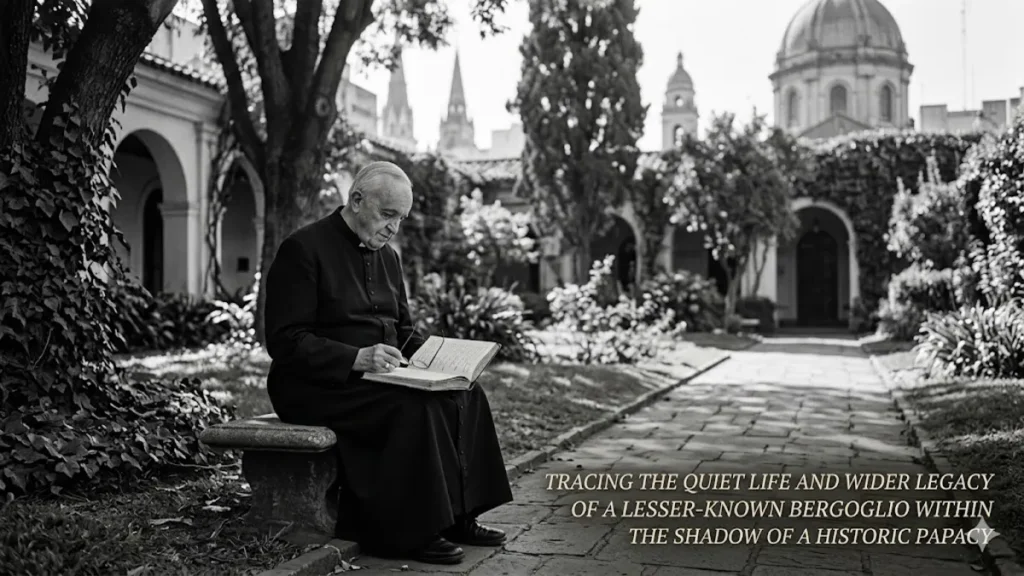
I begin by addressing the central question directly: oscar adrian bergoglio is a lesser-known member of the Bergoglio family, most widely recognized through his familial connection to Jorge Mario Bergoglio, who became Pope Francis in 2013. While global attention has focused on the Pope’s life and leadership, individuals like Oscar Adrián Bergoglio remain largely absent from public discourse, their stories overshadowed by history’s spotlight.
Understanding Oscar Adrián Bergoglio requires stepping into the broader context of Argentine society, family lineage, and the quiet lives that exist behind public figures. Unlike his famous relative, Oscar has not occupied a global stage, nor has he held a prominent role in ecclesiastical or political institutions. Yet his existence offers insight into the familial networks and cultural environments that shape influential individuals.
The Bergoglio family, rooted in Italian immigrant heritage, reflects a common narrative in Argentina, where waves of European migration in the late 19th and early 20th centuries reshaped the nation’s identity. Within this framework, Oscar Adrián Bergoglio represents a thread in a much larger tapestry, one that intertwines personal history with global significance.
This article examines what is known about oscar adrian bergoglioo, situating his life within the broader historical, cultural, and familial context that has defined one of the most influential religious figures of the 21st century.
The Bergoglio Family Origins in Argentina
To understand oscar adrian bergoglio, I look first at the family’s origins. The Bergoglio lineage traces back to northern Italy, specifically the Piedmont region, from which many Italians emigrated to Argentina in search of economic opportunity.
In the early 20th century, Argentina experienced a surge of immigration, transforming cities like Buenos Aires into vibrant multicultural hubs. The Bergoglio family was part of this migration wave, bringing with them traditions, language, and a strong Catholic identity.
Oscar Adrián Bergoglio’s ancestors, like many Italian immigrants, integrated into Argentine society while preserving elements of their heritage. This dual identity influenced family dynamics, values, and social positioning.
Historian Fernando Devoto has written that “Italian immigration was central to the formation of modern Argentine identity,” highlighting how families like the Bergoglios contributed to national development.
Within this context, the Bergoglio family was neither elite nor marginalized but part of a growing middle class that valued education, work, and religious devotion.
Family Structure and Relationships
The Bergoglio family structure provides key insights into Oscar Adrián Bergoglio’s place within it. Large extended families were common, with strong intergenerational ties and shared responsibilities.
Pope Francis was born in 1936 to Mario José Bergoglio and Regina María Sívori, both of Italian descent. The family environment emphasized humility, discipline, and faith.
Oscar Adrián Bergoglio is understood to be part of this extended family network, though detailed public records about his life remain limited. This absence of documentation reflects a broader pattern: not all relatives of prominent figures enter public archives or media narratives.
Sociologist Pierre Bourdieu once noted that “family capital extends beyond visibility,” suggesting that influence and identity are not always tied to public recognition. Oscar’s role within the family may have been significant in private, even if it remains undocumented in public discourse.
A Timeline of Key Family Milestones
| Year | Event | Significance |
|---|---|---|
| Late 1800s | Italian migration to Argentina | Foundation of Bergoglio family in Argentina |
| 1936 | Birth of Jorge Mario Bergoglio | Future Pope Francis |
| 1950s–1970s | Family expansion and social mobility | Establishment in middle-class society |
| 2013 | Election of Pope Francis | Global recognition of Bergoglio name |
This timeline underscores how individual lives intersect with historical events, shaping collective memory.
READ: Xaden Riorson Guide: Powers, Secrets, and Empyrean Lore
The Shadow of a Global Figure
Living in proximity to a figure like Pope Francis inevitably shapes public perception of family members. The Pope’s election in 2013 marked a historic moment, as he became the first pontiff from the Americas and the Southern Hemisphere.
This global recognition brought unprecedented attention to the Bergoglio name. However, it also created a dynamic in which lesser-known relatives, including Oscar Adrián Bergoglio, became peripheral figures in a narrative dominated by one individual.
Journalist Austen Ivereigh, a biographer of Pope Francis, has observed that “the Pope’s humility extends to his family, many of whom live ordinary lives away from the spotlight.” This observation highlights the contrast between public prominence and private existence.
For Oscar Adrián Bergoglio, this dynamic likely meant navigating a balance between personal identity and association with a globally recognized figure.
Cultural Context: Argentina in the 20th Century
The life of oscar adrian bergoglio cannot be separated from the broader cultural and political landscape of Argentina. The country experienced significant upheaval throughout the 20th century, including periods of economic growth, political instability, and military dictatorship.
During the 1970s, Argentina underwent the “Dirty War,” a period of state-sponsored violence that affected thousands of families. While there is no public record linking Oscar Adrián Bergoglio directly to these events, they formed the backdrop of everyday life.
Economist Carlos Díaz-Alejandro described Argentina’s mid-century period as “a complex interplay of progress and crisis,” reflecting the environment in which the Bergoglio family lived.
These historical forces shaped social structures, opportunities, and personal experiences, influencing the lives of countless individuals, including those within the Bergoglio family.
Public Visibility vs. Private Lives
One of the most striking aspects of Oscar Adrián Bergoglio’s story is the contrast between public visibility and private life. In an age of digital information, it is unusual for individuals connected to global figures to remain largely undocumented.
This absence raises questions about how history is recorded and whose stories are preserved. While public figures are extensively documented, their relatives often remain in the shadows.
Historian Natalie Zemon Davis has argued that “history is as much about what is missing as what is recorded.” Oscar Adrián Bergoglio’s limited public profile exemplifies this idea.
It suggests that not all narratives are equally valued or preserved, and that the lives of ordinary individuals, even those connected to extraordinary figures, can remain largely invisible.
Comparing Public and Private Bergoglio Narratives
| Aspect | Public Narrative | Private Reality |
|---|---|---|
| Visibility | Global recognition of Pope Francis | Limited information on relatives |
| Documentation | Extensive biographies and media coverage | Sparse records |
| Influence | Religious and political impact | Familial and personal roles |
| Legacy | Historical significance | Personal and localized impact |
This comparison highlights the disparity between global narratives and individual experiences.
The Sociology of Fame and Family
The relationship between fame and family is complex. When one member achieves global prominence, it can reshape the identities of others within the family.
Sociologist Erving Goffman’s theory of “presentation of self” suggests that individuals navigate different roles depending on context. For Oscar Adrián Bergoglio, this may involve balancing personal identity with public association.
The phenomenon is not unique to the Bergoglio family. Many relatives of public figures experience similar dynamics, where their identities are partially defined by their connection to someone else.
This raises broader questions about individuality, recognition, and the nature of legacy.
The Importance of Lesser-Known Figures
I find that examining lesser-known individuals like oscar adrian bergoglio offers valuable insights into history. These figures provide a more nuanced understanding of the environments and relationships that shape prominent individuals.
Rather than focusing solely on extraordinary achievements, this perspective emphasizes the collective nature of human experience. Families, communities, and cultural contexts all contribute to the development of influential figures.
By exploring these connections, we gain a deeper appreciation of the forces that shape history.
Takeaways
- Oscar Adrián Bergoglio is a lesser-known member of the Bergoglio family connected to Pope Francis.
- The family’s Italian immigrant roots played a key role in shaping their identity.
- Public attention on Pope Francis has overshadowed other family members.
- Argentina’s historical context influenced the lives of the Bergoglio family.
- Limited documentation highlights gaps in historical narratives.
- Lesser-known figures provide valuable insights into broader social dynamics.
Conclusion
I reflect on oscar adrian bergoglio not as a figure defined by absence, but as one defined by context. His story, though largely undocumented, represents the countless individuals who exist alongside history’s most visible figures.
In focusing on him, I am reminded that history is not only shaped by those who stand at the center of global events, but also by those who remain at its edges. Their lives, though less visible, are equally integral to the fabric of human experience.
The Bergoglio family’s journey from Italian immigrants to global recognition through Pope Francis is a testament to the interconnectedness of personal and collective histories. Within this narrative, Oscar Adrián Bergoglio occupies a quiet yet meaningful place.
FAQs
Who is Oscar Adrián Bergoglio?
He is a lesser-known member of the Bergoglio family, connected to Pope Francis, with limited public information available.
Is he related to Pope Francis?
Yes, he is believed to be part of the extended Bergoglio family.
Why is there little information about him?
He has not held a public role, and historical records often prioritize prominent figures.
What is the significance of the Bergoglio family?
The family gained global recognition through Pope Francis and reflects Argentina’s Italian immigrant heritage.
Why study lesser-known figures?
They provide deeper context and understanding of the environments that shape influential individuals.