


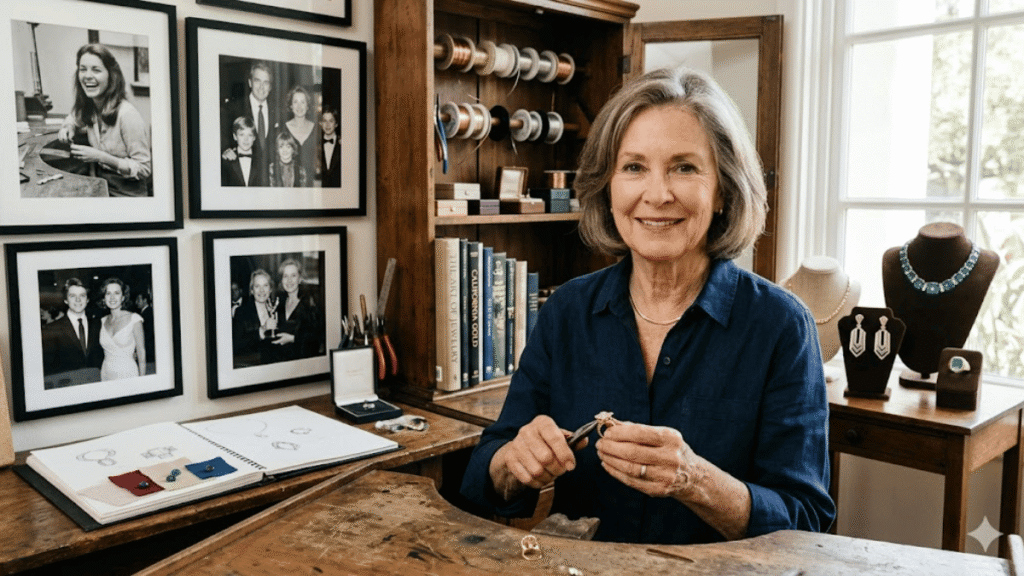
Pamela Hilburger is widely recognized as a jewelry designer and as a significant figure connected to one of Hollywood’s most creative and entrepreneurial families. While she is not a mainstream celebrity in the traditional sense, her name frequently appears in discussions related to fashion, design, and entertainment due to her personal and familial connections. Her life intersects with the worlds of art, business, and celebrity culture, making her a subject of interest for those studying creative industries and celebrity family dynasties.
Hilburger’s identity is often associated with her work in jewelry design and her former marriage to restaurateur and entrepreneur Rocky Aoki, the founder of the Benihana restaurant empire. Through this connection, she became part of a family that has had a lasting impact on global entertainment, food culture, and fashion. She is also the mother of Devon Aoki, an internationally recognized supermodel and actress, and part of a broader artistic lineage that includes influential figures in music and entrepreneurship.
This article explores Pamela Hilburger’s background, professional identity, family relationships, and cultural significance. It also examines how her influence extends beyond her personal career into the realms of fashion, celebrity heritage, and generational creativity. Understanding her story provides insight into how creative professions and family networks shape modern celebrity culture.
Table 1: Overview of Pamela Hilburger
| Aspect | Details |
|---|---|
| Full Name | Pamela Hilburger |
| Profession | Jewelry Designer |
| Known For | Creative work in jewelry design and connection to the Aoki family |
| Family Connection | Former spouse of Rocky Aoki |
| Children | Devon Aoki and siblings within the Aoki family |
| Industry Relevance | Fashion, jewelry design, celebrity culture |
| Public Profile | Low-profile, private lifestyle |
| Cultural Influence | Indirect influence through fashion and celebrity family legacy |
Early Life and Background of Pamela Hilburger
Pamela Hilburger’s early life remains largely private, which is consistent with her overall approach to public visibility. Unlike many figures in celebrity culture, she has not actively sought media exposure or documented her personal history in detail for public consumption. This privacy has contributed to a certain level of curiosity about her background, particularly among those who follow fashion and celebrity genealogy.
What is generally understood is that Hilburger developed an interest in artistic expression early in life, eventually channeling this creativity into jewelry design. Jewelry design, as a discipline, requires both technical skill and aesthetic sensitivity, blending craftsmanship with artistic vision. Hilburger’s association with this field suggests a strong foundation in design thinking and visual creativity, even if formal biographical records are limited.
Her life trajectory also reflects a broader pattern seen among individuals connected to high-profile families: private creative work existing alongside public association through relationships. This dual identity—artist and celebrity family member—often shapes how such individuals are perceived in media narratives. In Hilburger’s case, her identity is more strongly recognized through her family connections than through standalone media coverage of her early years.
Despite limited public documentation, her role as a designer indicates engagement with the fashion and luxury goods ecosystem. Jewelry design, particularly in the context of celebrity culture, often intersects with high fashion, personal branding, and artistic entrepreneurship. Hilburger’s background therefore positions her within a creative industry that values both craftsmanship and aesthetic storytelling.
Career as Jewelry Designer and Artistic Identity
Pamela Hilburger’s professional identity as a jewelry designer is central to understanding her individual contribution to creative culture. Jewelry design is a highly specialized field that combines artistry, material knowledge, and market awareness. Designers must balance creativity with functionality, producing pieces that are both visually compelling and wearable in real-world contexts.
Hilburger’s design work is often described in general terms as artistic and expressive, aligning with broader trends in boutique jewelry design. Independent jewelry designers frequently operate outside large commercial brands, focusing instead on unique, handcrafted pieces. This approach emphasizes individuality, symbolism, and artistic storytelling, which contrasts with mass-produced fashion jewelry.
Within this context, Hilburger’s work can be understood as part of a broader movement in contemporary jewelry design that values personalization and artistic identity. Jewelry in this category often serves as both adornment and narrative object, reflecting personal meaning, emotional significance, or cultural references. Designers like Hilburger contribute to this ecosystem by maintaining a focus on artistic integrity rather than purely commercial production.
Her creative identity also aligns with the aesthetic sensibilities often found in fashion-forward celebrity circles. Jewelry design in such environments is not only about decoration but also about identity formation. Pieces become extensions of personality, status, and artistic expression. Hilburger’s association with this space reinforces her position within a culturally influential design niche.
Although she is not widely publicized as a commercial brand figure, her work is part of the broader fabric of independent design culture. This includes small-scale production, bespoke commissions, and artistic experimentation. In this sense, her career reflects a more understated but meaningful contribution to fashion and jewelry artistry.
Marriage to Rocky Aoki and Connection to the Aoki Legacy
One of the most publicly recognized aspects of Pamela Hilburger’s life is her former marriage to Rocky Aoki, the founder of the Benihana restaurant chain. Rocky Aoki was a prominent entrepreneur whose influence extended across global dining culture and entertainment. His brand became synonymous with theatrical dining experiences and international expansion of Japanese cuisine in Western markets.
Hilburger’s marriage to Aoki placed her within a high-profile entrepreneurial and celebrity environment. The Aoki family became widely known not only for its business success but also for its cultural impact across multiple industries, including food, music, and fashion. This connection significantly shaped how Hilburger is referenced in public discourse.
Within celebrity family structures, marriages often create intersections between personal identity and public legacy. Hilburger’s association with Aoki is a key example of this dynamic. While her own professional identity remains rooted in design, her connection to the Aoki family situates her within a broader narrative of entrepreneurship and entertainment culture.
The Aoki family’s influence spans multiple generations, including figures in music and fashion. This multi-industry presence contributes to ongoing public interest in family members and their individual roles. Hilburger’s place in this lineage is particularly relevant because it connects artistic design with entrepreneurial heritage.
Although her marriage to Rocky Aoki eventually ended, the cultural and familial connections remain part of her public identity. This reflects a common phenomenon in celebrity culture, where familial associations continue to shape perception long after personal relationships change.
Family Life and Children
Pamela Hilburger is perhaps most widely recognized as the mother of Devon Aoki, an internationally known supermodel and actress. Devon Aoki achieved significant success in the fashion and film industries, working with major brands and appearing in prominent media productions. Her career brought increased visibility to the Aoki family and, by extension, to Hilburger’s role within that lineage.
Hilburger’s influence as a parent is often discussed in the context of creative inheritance. Families involved in artistic or entrepreneurial industries frequently pass down aesthetic sensibilities, work ethic, and cultural exposure to their children. In this sense, Hilburger’s background in jewelry design may have contributed to Devon Aoki’s early immersion in fashion and visual culture.
Beyond Devon, Hilburger is also part of a broader family network that includes individuals active in music and business. The Aoki family is known for its diverse creative output, spanning modeling, DJ culture, entrepreneurship, and entertainment branding. This diversity reflects a generational expansion of creative industries within a single family system.
Family dynamics in celebrity contexts often become part of public storytelling, even when individuals themselves maintain privacy. Hilburger’s role in this system is largely foundational rather than performative; she is not a media-facing celebrity but rather a connective figure within a larger creative lineage.
Her approach to privacy has also influenced how her children navigate public life. In many celebrity families, one parent may remain private while another or their children become public figures. This balance often shapes how identity is formed across generations, allowing for both visibility and personal boundaries.
Influence on Fashion and Celebrity Culture
Pamela Hilburger’s influence on fashion culture is largely indirect but meaningful. As a jewelry designer and mother of a major fashion icon, her presence is embedded in the ecosystem of celebrity style and aesthetic development. Jewelry design plays a crucial role in fashion, often serving as the finishing element that defines a look or personal brand.
In celebrity culture, accessories such as jewelry are not merely decorative but symbolic. They communicate identity, status, and artistic taste. Designers like Hilburger contribute to this symbolic economy by creating pieces that may be worn in private, editorial, or public contexts. Even without mainstream branding, such contributions shape visual culture.
Her connection to Devon Aoki further amplifies this influence. Devon’s modeling career, which spans runway, editorial, and cinematic roles, has helped define certain fashion aesthetics in global pop culture. The creative environment in which she was raised likely included exposure to design thinking, artistic experimentation, and visual storytelling.
Celebrity culture often operates through networks of influence rather than isolated achievements. Hilburger’s role illustrates how behind-the-scenes creative professionals contribute to broader cultural narratives. While not always publicly visible, these contributions are essential to the development of fashion ecosystems.
Additionally, her work reflects the broader trend of independent artisans influencing high fashion indirectly. Many luxury designers and stylists draw inspiration from boutique creators, even if those creators are not widely publicized. Hilburger’s position aligns with this pattern of quiet but persistent cultural influence.
Public Perception and Media Coverage
Public perception of Pamela Hilburger is shaped more by association than by direct media engagement. Unlike many contemporary public figures, she has maintained a relatively low-profile presence, which limits direct media narratives about her personal life or professional activities. As a result, most public information about her is derived from her family connections.
This type of visibility is common in celebrity-adjacent individuals who are not active public personalities themselves. Media coverage tends to focus on relational identity—such as being the mother of a celebrity or former spouse of a well-known entrepreneur—rather than independent career achievements.
However, this does not diminish her relevance within cultural discussions. Instead, it highlights how modern celebrity ecosystems function through interconnected identities. Individuals like Hilburger occupy an important role in these systems by contributing to foundational creative and familial structures.
Her privacy-oriented lifestyle also influences public interpretation. In an era where many public figures maintain active digital presences, choosing privacy can create a sense of mystery. This often leads to increased curiosity, particularly when the individual is connected to high-profile families.
Overall, media coverage of Hilburger remains limited, but her name continues to appear in discussions about the Aoki family and fashion industry heritage.
Legacy and Continuing Influence
Pamela Hilburger’s legacy is best understood as a combination of artistic contribution and familial influence. While she may not be a mainstream celebrity or commercial fashion icon, her role as a designer and parent places her within a meaningful cultural lineage. Her influence is most visible through the achievements of her children and the continued recognition of the Aoki family in global entertainment.
Her work in jewelry design represents a form of creative expression that aligns with broader artistic movements emphasizing individuality and craftsmanship. Even without extensive public branding, such work contributes to the cultural landscape of fashion and design.
The continuation of her legacy is also evident in how creative industries increasingly recognize the importance of behind-the-scenes contributors. Designers, artisans, and creative parents all play roles in shaping the trajectories of public figures and cultural trends.
As fashion and celebrity culture continue to evolve, the importance of multi-generational creative families becomes more apparent. Hilburger’s position within this framework highlights how artistic identity can be both personal and inherited, shaping cultural narratives across decades.
Ultimately, her legacy is not defined by mass media visibility but by sustained influence within a creative ecosystem that spans jewelry design, fashion modeling, and entrepreneurial innovation.
Conclusion
Pamela Hilburger represents a unique intersection of artistry, privacy, and celebrity family legacy. As a jewelry designer, she contributes to a creative field that values craftsmanship and aesthetic expression. As a member of the Aoki family, she is connected to one of the most recognizable entrepreneurial and entertainment dynasties in modern culture.
Her life demonstrates how influence in creative industries often operates beyond direct visibility. While she maintains a low public profile, her impact is reflected through her family’s achievements and her contributions to design culture. This dual presence—private creator and public family figure—offers a nuanced understanding of how celebrity ecosystems function.
In a broader cultural context, Hilburger’s story underscores the importance of recognizing behind-the-scenes contributors in fashion and entertainment. Her legacy is not built on fame but on creative participation and generational influence, making her a subtle yet meaningful figure in contemporary celebrity culture.
FAQs
Who is Pamela Hilburger?
Pamela Hilburger is a jewelry designer best known for her artistic work and as a member of the Aoki family through her former marriage to entrepreneur Rocky Aoki.
What is Pamela Hilburger known for?
She is known for her work in jewelry design and for being the mother of supermodel and actress Devon Aoki.
Is Pamela Hilburger a celebrity?
She is not a mainstream celebrity but is recognized due to her family connections and her involvement in the creative design industry.
How is Pamela Hilburger connected to the Aoki family?
She was married to Rocky Aoki, founder of Benihana, making her part of the Aoki family lineage that includes prominent figures in fashion and entertainment.
What is her influence in fashion?
Her influence is primarily indirect, stemming from her jewelry design work and her contribution to a creative environment that shaped her children’s success in fashion and entertainment.