


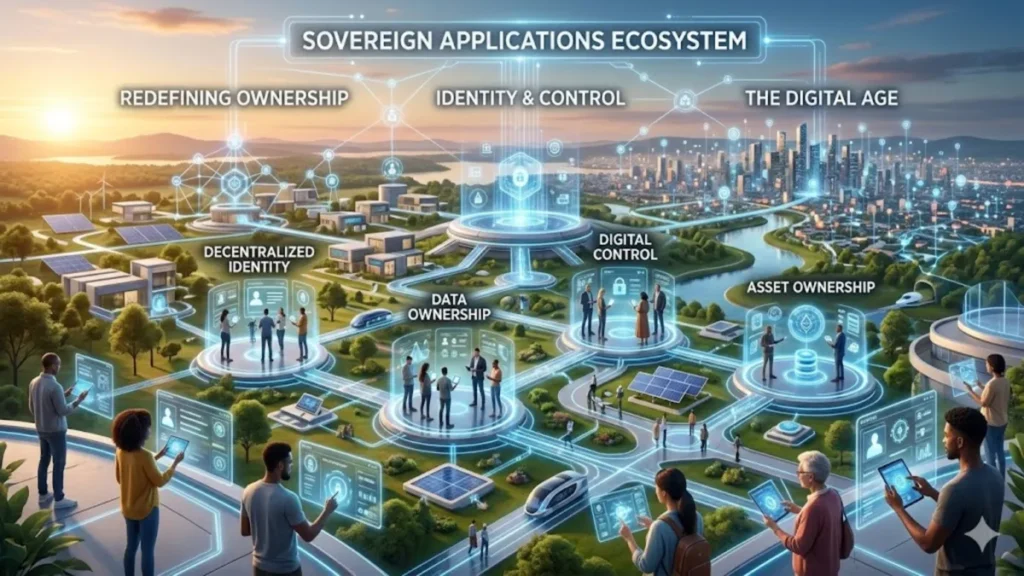
I came across the concept of “SovApp” while exploring how digital systems are evolving beyond centralized platforms. At its core, a SovApp, short for sovereign application, refers to a type of software designed to give users full ownership and control over their data, identity, and interactions. Unlike traditional apps that rely on centralized servers and corporate oversight, SovApps operate on decentralized infrastructures such as blockchain networks, enabling greater autonomy and transparency.
In the first few moments of understanding, it becomes clear why SovApps are gaining attention. As concerns about data privacy, surveillance, and platform monopolies intensify, users and developers alike are seeking alternatives that prioritize sovereignty. SovApps aim to eliminate intermediaries, allowing individuals to interact directly with systems and each other without relying on centralized authorities.
But the idea goes deeper than technology. SovApps represent a philosophical shift toward digital self-determination. They challenge long-standing assumptions about ownership, trust, and governance in the online world. As the digital economy expands, the question is no longer just what applications can do, but who controls them and who benefits.
This article explores the rise of SovApps, how they function, and what their growth means for the future of technology, business, and society.
Defining SovApp: A New Class of Digital Systems
SovApps are built on the principle of digital sovereignty, which emphasizes user control over data and identity. Unlike conventional applications hosted on centralized servers, SovApps leverage decentralized technologies such as blockchain, distributed storage, and peer-to-peer networks.
These applications often integrate self-sovereign identity systems, enabling users to manage their credentials without relying on third-party providers. This approach reduces dependency on centralized platforms like social media networks or cloud services.
Computer scientist Tim Berners-Lee has long advocated for user control over data, stating that “individuals should have control over their personal data.” SovApps embody this vision by design, embedding ownership into their architecture.
The defining characteristics of SovApps include decentralization, transparency, interoperability, and user ownership. These features collectively create systems that are resilient, censorship-resistant, and aligned with user interests.
As the concept gains traction, it is becoming a cornerstone of the broader Web3 movement.
The Technology Behind Sovereign Applications
The infrastructure supporting SovApps is complex but increasingly accessible. Blockchain technology serves as the backbone, providing a decentralized ledger that records transactions and interactions without a central authority.
Smart contracts automate processes within SovApps, enabling trustless interactions. These self-executing programs ensure that agreements are enforced without intermediaries.
Distributed storage solutions such as IPFS (InterPlanetary File System) store data across multiple nodes, reducing reliance on centralized servers and enhancing resilience.
| Technology Component | Function | Example Use Case |
|---|---|---|
| Blockchain | Decentralized ledger | Transaction verification |
| Smart Contracts | Automated execution | Payment settlements |
| Distributed Storage | Data decentralization | File hosting |
| Self-Sovereign Identity | User-controlled identity | Login authentication |
Ethereum co-founder Vitalik Buterin has emphasized that “decentralization is about removing points of control and failure.” SovApps operationalize this principle, creating systems that are less vulnerable to manipulation or shutdown.
Why SovApps Are Emerging Now
The timing of SovApps is not accidental. Several converging trends have created fertile ground for their development.
First, data privacy scandals, including the 2018 Cambridge Analytica incident, exposed vulnerabilities in centralized systems. Public trust in large technology companies has since declined.
Second, regulatory pressures such as the European Union’s General Data Protection Regulation (GDPR) have increased awareness of data rights and compliance requirements.
Third, advances in blockchain technology have made decentralized applications more practical and scalable. Networks are faster, more efficient, and capable of supporting complex use cases.
Technology analyst Benedict Evans has noted that “the shift from centralized to decentralized systems is driven as much by trust issues as by technological innovation.”
Together, these factors have accelerated interest in SovApps, positioning them as a viable alternative to traditional applications.
Comparing SovApps with Traditional Applications
| Feature | Traditional Apps | SovApps |
|---|---|---|
| Data Ownership | Controlled by platform | Controlled by user |
| Infrastructure | केंद्रीकृत servers | Decentralized networks |
| Identity Management | Platform-based login | Self-sovereign identity |
| Transparency | Limited | High |
| Censorship Resistance | Low | High |
This comparison highlights the fundamental differences between the two paradigms. While traditional apps prioritize convenience and control, SovApps emphasize autonomy and transparency.
However, these benefits come with trade-offs. SovApps can be more complex to use and may lack the polished user experience of centralized platforms.
READ: The Relentless Gale: An Expert Analysis of Sanemi Shinazugawa
Real-World Applications of SovApps
SovApps are already being deployed across various sectors, demonstrating their versatility and potential impact.
In finance, decentralized finance (DeFi) platforms enable users to lend, borrow, and trade assets without intermediaries. These systems operate entirely on blockchain networks, offering transparency and accessibility.
In identity management, Sov-Apps allow individuals to control their digital credentials, reducing reliance on centralized identity providers.
Supply chain management is another area where SovApps are gaining traction. By recording transactions on a blockchain, companies can ensure transparency and traceability.
Economist Don Tapscott has argued that “blockchain technology has the potential to redefine how we manage value and trust.” SovApps represent a practical implementation of this vision.
Challenges and Limitations
Despite their promise, SovApps face significant challenges. Scalability remains a major issue, as blockchain networks can struggle to handle large volumes of transactions.
User experience is another barrier. Many SovApps require technical knowledge, limiting their accessibility to mainstream users.
Regulatory uncertainty also poses risks. Governments are still determining how to classify and regulate decentralized systems, creating ambiguity for developers and users.
Security concerns persist as well. While blockchain technology is inherently secure, vulnerabilities in smart contracts can lead to significant losses.
These challenges must be addressed for SovApps to achieve widespread adoption.
The Business Implications of SovApps
For businesses, SovApps represent both an opportunity and a disruption. Companies that adopt decentralized models can differentiate themselves by offering greater transparency and user control.
At the same time, SovApps challenge traditional business models that rely on data monetization. By giving users ownership of their data, these applications reduce the ability of companies to exploit user information for profit.
This shift could lead to new revenue models, such as token-based economies and decentralized governance structures.
Management scholar Clayton Christensen’s theory of disruptive innovation provides a useful lens here. SovApps have the potential to disrupt established players by offering a fundamentally different value proposition.
Governance and Community Control
One of the most distinctive features of SovApps is their governance model. Many operate through decentralized autonomous organizations (DAOs), where decisions are made collectively by users.
This approach contrasts sharply with traditional corporate governance, where decisions are made by executives and shareholders.
DAOs enable users to vote on changes, allocate resources, and shape the direction of the application. This participatory model aligns incentives between developers and users.
However, governance in decentralized systems can be complex and contentious. Achieving consensus among diverse stakeholders is not always straightforward.
The Future of SovApps
Looking ahead, SovApps are likely to play an increasingly important role in the digital ecosystem. As technology advances and user awareness grows, demand for decentralized solutions is expected to rise.
Integration with emerging technologies such as artificial intelligence and the Internet of Things could further expand the capabilities of SovApps.
At the same time, collaboration between decentralized and centralized systems may create hybrid models that combine the strengths of both approaches.
The evolution of SovApps will depend on technological innovation, regulatory clarity, and user adoption.
Takeaways
- SovApps are decentralized applications that prioritize user ownership and control.
- They leverage blockchain, smart contracts, and distributed storage.
- Growing privacy concerns and technological advances are driving their adoption.
- They challenge traditional business models and governance structures.
- Scalability, usability, and regulation remain key challenges.
- SovApps represent a broader shift toward digital sovereignty.
Conclusion
I see SovApps as more than just a technological trend. They represent a reimagining of how digital systems can operate, shifting power from centralized entities to individuals.
This transformation will not happen overnight. It requires overcoming technical, regulatory, and cultural barriers. Yet the direction is clear. As users become more aware of their digital rights, the demand for sovereignty will continue to grow.
SovApps offer a glimpse into a future where individuals have greater control over their data, identity, and interactions. Whether they become the dominant model or coexist with traditional systems, their influence on the digital landscape is undeniable.
FAQs
What is a SovApp?
A SovApp is a sovereign application that gives users control over their data, identity, and interactions through decentralized technologies.
How do SovApps differ from traditional apps?
They operate on decentralized networks and prioritize user ownership, unlike centralized apps controlled by companies.
Are SovApps secure?
They are generally secure due to blockchain technology, but vulnerabilities in smart contracts can pose risks.
What industries use SovApps?
Finance, identity management, supply chain, and governance are key areas where SovApps are being applied.
Will SovApps replace traditional apps?
They may not fully replace them but are likely to coexist and influence future digital systems.