

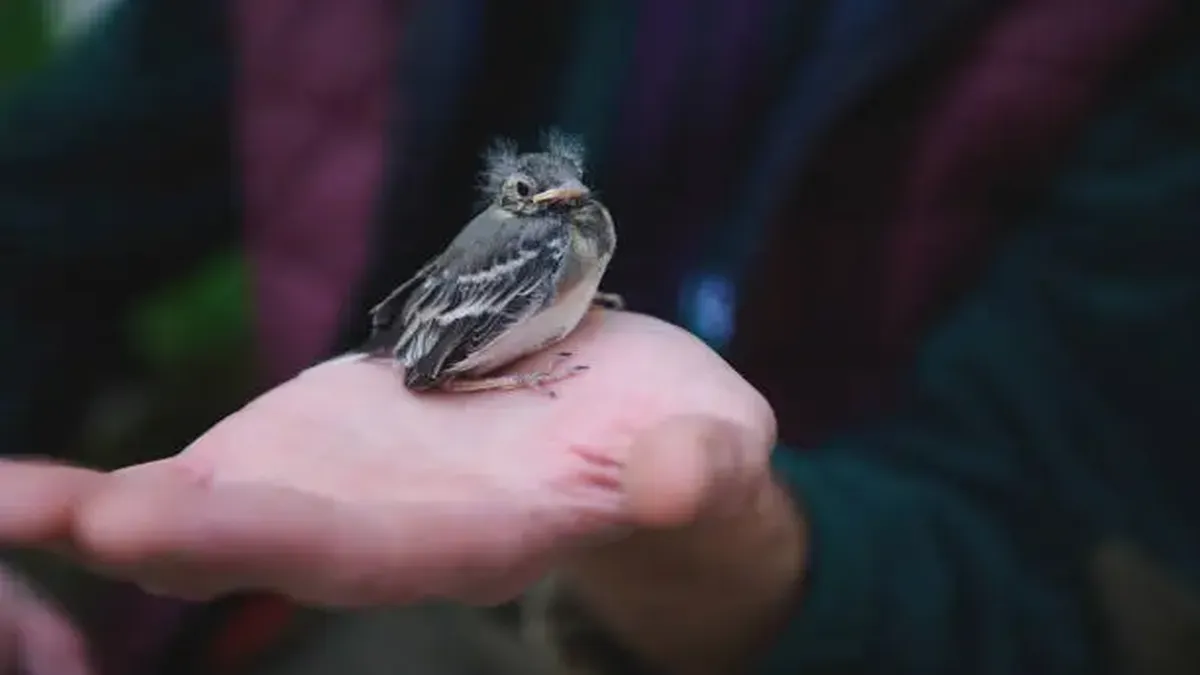
practices in modern ecology. Fuglering, literally meaning “bird ringing,” refers to the scientific method of attaching a small, lightweight ring to a bird’s leg in order to identify that individual throughout its life. This single act allows researchers to track migration routes, estimate lifespans, study breeding behavior, and monitor population changes over time. In practical terms, fuglering is how scientists turn the fleeting presence of a bird into a recordable life history.
In the first moments of encountering the concept, most people want to know what fuglering is and why it matters. The answer is that it transforms birds from anonymous members of a species into known individuals within a global scientific network. Each ring carries a unique code that can be read and reported whenever the bird is seen again, whether months later or decades later, thousands of kilometers away. This creates a living map of movement and survival that no other method has matched in scale or longevity.
Beyond its technical function, fuglering has shaped how humans understand birds. It has revealed that tiny songbirds can cross continents, that seabirds can live far longer than once assumed, and that migration is not random but structured along invisible aerial highways. The practice has also created a community of scientists and volunteers who share a common purpose: to understand and protect avian life in a changing world.
What Fuglering Is and How It Works
Fuglering is the practice of marking wild birds with uniquely coded rings or bands, usually attached to the lower leg. These rings are designed to be extremely light and durable so they do not interfere with the bird’s natural behavior. When a bird is later recaptured, resighted, or found, the code on the ring can be reported to a central database, linking that moment to the bird’s original capture data.
The process begins with careful capture, often using fine mist nets or specially designed traps that hold birds gently without injury. Once a bird is captured, a trained ringer identifies the species, determines its age and sex when possible, measures physical traits such as wing length and weight, and then fits an appropriately sized ring. The bird is released immediately afterward, usually within minutes.
From that point on, the bird becomes a data point in a much larger story. If it is seen again, perhaps by another researcher or a member of the public, that sighting adds a new chapter to its life history. Over time, thousands or millions of such records accumulate, allowing scientists to see patterns that no individual observation could reveal.
The Origins of Fuglering
The roots of fuglering lie in the late nineteenth century, when naturalists began seeking ways to move beyond anecdotal observations and toward systematic study of bird movement. The breakthrough came when early researchers demonstrated that birds could be marked safely and that these marks could be recovered later.
What began as an experiment became a methodology. By the early twentieth century, bird ringing schemes were established across Europe and North America. National programs coordinated training, standardization, and data storage, turning individual efforts into a collective scientific enterprise.
Over time, these schemes became interconnected. International cooperation made it possible to follow birds across borders, oceans, and political systems. Fuglering thus grew from a local practice into a global infrastructure for ecological knowledge.
The Science Behind the Rings
The scientific value of fuglering lies in its ability to produce long-term, individual-based data. This makes it possible to calculate survival rates, track migration routes, and understand population dynamics in ways that simple counts or short-term studies cannot.
For example, by analyzing where birds are recovered, scientists can map migratory flyways and identify critical stopover sites where birds rest and refuel. Protecting these sites becomes a priority for conservation, because damage to a single link in the chain can affect entire populations.
Longevity records derived from fuglering have also transformed understanding of bird lifespans. Some species once thought to live only a few years have been shown to survive for decades. This has implications for how populations respond to environmental stress, hunting, and habitat loss.
Fuglering and Conservation
Fuglering is not only about knowledge; it is also about protection. Data from ringing schemes are used to identify declining species, evaluate the effectiveness of conservation measures, and inform policy decisions.
When a population shows consistent declines in survival or breeding success, conservationists can investigate potential causes, such as habitat destruction, climate change, or pollution. Fuglering data provide the evidence needed to argue for protected areas, hunting regulations, or international agreements.
In this way, fuglering serves as both an early warning system and a measuring tool. It tells us not only that something is wrong but also whether efforts to fix it are working.
Ethical Dimensions of Fuglering
Any practice that involves handling wild animals raises ethical questions. Fuglering addresses these through training, regulation, and constant review. Only licensed individuals are allowed to ring birds, and they must follow strict protocols designed to minimize stress and risk.
The rings themselves are tested to ensure they do not cause injury or impede movement. Researchers also study whether ringing affects survival or behavior, and methods are adjusted if problems are detected.
This ethical framework reflects a broader shift in science toward responsibility and respect for living subjects. Fuglering continues to evolve as new materials, technologies, and ethical standards emerge.
Fuglering as a Human Community
Beyond science and policy, fuglering creates a unique human network. Professional ornithologists, students, and volunteers all participate in ringing schemes. They share data, experiences, and often a deep emotional connection to the birds they handle.
For many, the moment of releasing a ringed bird is both scientific and symbolic. It represents trust in the bird’s resilience and hope that the information it carries will contribute to a better understanding of nature.
This sense of shared purpose has sustained fuglering for more than a century, making it not just a method but a tradition.
Key Functions of Fuglering
| Function | Purpose | Result |
|---|---|---|
| Individual marking | Identify birds | Track life histories |
| Migration tracking | Map movements | Protect flyways |
| Survival analysis | Measure longevity | Understand population health |
Methods Used in Fuglering
| Method | Description | Use |
|---|---|---|
| Metal rings | Permanent ID tags | Long-term studies |
| Color rings | Visible markers | Field observation |
| Recapture | Re-catching birds | Detailed measurements |
Expert Perspectives
Ecologists often describe fuglering as the backbone of avian population science. Without it, they argue, many key discoveries about migration and survival would not exist.
Conservation practitioners emphasize its policy relevance, noting that ringing data underpin many international bird protection agreements.
Educators highlight its value as a bridge between science and the public, because it allows ordinary people to contribute to research simply by reporting a ring.
Takeaways
• Fuglering is the scientific practice of marking birds to track their lives
• It began over a century ago and now operates globally
• It provides critical data on migration, survival, and population trends
• It informs conservation policy and habitat protection
• It is governed by strict ethical and training standards
• It connects scientists and citizens in a shared ecological effort
Conclusion
Fuglering is a quiet science. It does not rely on satellites or supercomputers, yet it has reshaped understanding of the natural world. By following the lives of individual birds, it reveals the structure of migration, the fragility of ecosystems, and the resilience of life itself.
In an era of rapid environmental change, the value of such long-term, detailed knowledge cannot be overstated. Fuglering reminds us that careful observation, sustained over time, is one of humanity’s most powerful tools for understanding and protecting the planet. Each ringed bird carries not only a code but a story, and together those stories form a map of life in motion.
FAQs
What is fuglering
It is the practice of attaching a unique ring to a bird to track its movements and life history.
Is fuglering safe for birds
When done by trained professionals, it has minimal impact on bird welfare.
Why is fuglering important
It helps scientists understand migration, survival, and population changes.
Who can participate in fuglering
Licensed researchers and trained volunteers under national schemes.
How does fuglering help conservation
It provides data that guide species protection and habitat management.
REFERENCES
- Mortensen, H. C. C. (1899). Early bird ringing practice and development. Copenhagen Bird Ringing Centre Archives.
- Bird ringing. (n.d.). In Wikipedia. Retrieved from https://en.wikipedia.org/wiki/Bird_ringing. Wikipedia
- Copenhagen Bird Ringing Centre. (n.d.). Migration atlas contributors. Retrieved from https://migrationatlas.org/contributors/copenhagen-bird-ringing-centre. migrationatlas.org
- Revtangen Bird Observatory. (n.d.). Ringing of birds. Retrieved from https://www.revtangen.no/en/forskning/ringmerking-av-fugler. Revtangen
- BirdLife Malta. (n.d.). Bird ringing. Retrieved from https://birdlifemalta.org/conservation/bird-ringing/. birdlifemalta.org