

For a long time, timber sat awkwardly in conversations about modern construction. It was admired, often talked about, but rarely trusted when projects became complex or budgets tightened. Engineers worried about movement. Contractors worried about consistency. Clients worried about maintenance. Those concerns were not imagined. They came from experience.
What has shifted is not sentiment, but control. Timber is no longer treated as a raw, unpredictable material that needs to be restrained. Instead, it is increasingly engineered, modified, and specified as part of a system. That change has quietly transformed how timber fits into contemporary building design.
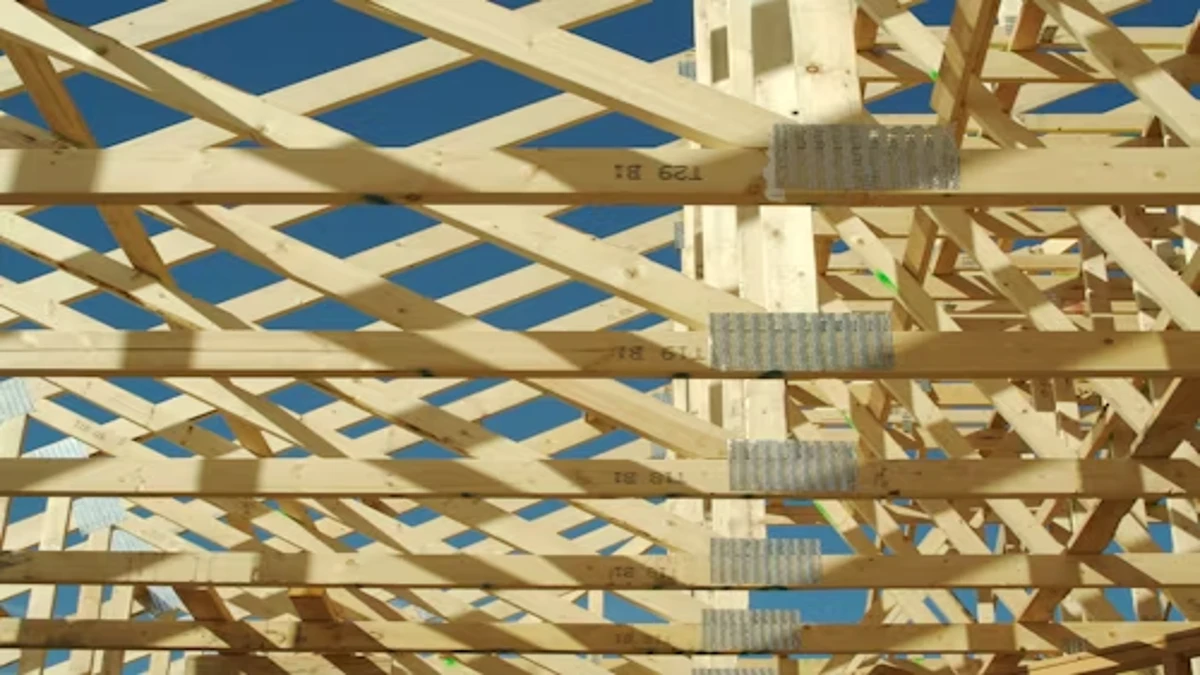
Engineered timber products were one of the first steps in this direction. By combining layers, controlling grain orientation, and reducing natural weaknesses, manufacturers were able to produce timber elements that behaved more consistently. This opened the door to wider structural use, but it also influenced how timber was viewed at a façade level.
Once timber could be trusted to behave predictably, architects began to revisit its potential beyond purely aesthetic roles. Cladding systems became cleaner. Details became simpler. Timber stopped being treated as a surface that needed constant correction.
Thermal modification took this thinking further. Rather than relying on coatings or chemical treatments, the timber itself is altered. Heat changes the internal structure of the wood, reducing its ability to absorb moisture and improving dimensional stability. The result is material that looks familiar, but behaves very differently from untreated timber.
This matters most on building exteriors, where exposure is constant and forgiving assumptions rarely hold up. Thermally modified timber allows façades to perform consistently across seasons, reducing the likelihood of warping, splitting, or uneven weathering. That reliability has been key to its wider adoption.
Materials such as ThermoWood cladding sit at the centre of this shift. The modification process improves durability without introducing chemical preservatives, making it suitable for projects that demand both performance and environmental consideration.
From a design perspective, this predictability simplifies decision-making. Architects can specify timber with fewer caveats. Profiles can be refined. Junctions can be resolved cleanly. The material no longer needs to be hidden behind excessive allowances.
There is also a subtle visual benefit. Thermally modified timber tends to age more evenly than untreated alternatives. Colour changes happen gradually rather than in patches. Surfaces settle instead of deteriorating. Over time, buildings feel intentional rather than neglected.
Engineered timber thinking also encourages a systems-based approach. Rather than selecting materials in isolation, designers consider how cladding, structure, fixings, and finishes interact. Timber becomes part of a coordinated solution rather than a decorative afterthought.
Profiles play an important role here. Board geometry influences shadow lines, drainage, and ventilation. Simple, repeatable profiles reduce installation errors and improve long-term performance. This is where traditional forms reappear, not out of nostalgia, but practicality.
Systems such as loglap cladding reflect this balance. Overlapping boards manage water effectively while allowing the timber to move naturally. The profile is familiar, but its modern application benefits from improved material stability.
For contractors, this predictability reduces risk. Installation tolerances are clearer. Sequencing is simpler. Fewer on-site adjustments are required to compensate for unexpected movement. That consistency matters, particularly on larger projects where small errors scale quickly.
Clients benefit in quieter ways. Maintenance cycles are extended. Visual changes happen more slowly and evenly. The façade continues to perform without demanding constant attention. Over the lifespan of a building, those benefits add up.
Fire performance, sustainability, and durability are often discussed separately, but in practice they overlap. Engineered and thermally modified timber systems make it easier to address these concerns together rather than in conflict. The material becomes adaptable rather than limiting.
Sustainability is rarely the sole reason timber is specified, but it is increasingly an expectation. Thermally modified timber stores carbon and avoids heavy chemical treatments. Engineered profiles reduce waste by maximising usable material. These factors strengthen the case for timber without needing exaggerated claims.
What has changed most is how timber is framed within modern construction. It is no longer the fragile option that needs defending. When engineered and modified correctly, it becomes a rational choice that fits contemporary expectations.
As building systems continue to evolve, timber’s role is likely to expand further. Not because it is traditional, but because it has adapted. Controlled, predictable, and increasingly versatile, timber has found a new place in modern building systems that feels earned rather than assumed.
 admin
admin  Luys Parker
  IQ Newswire