

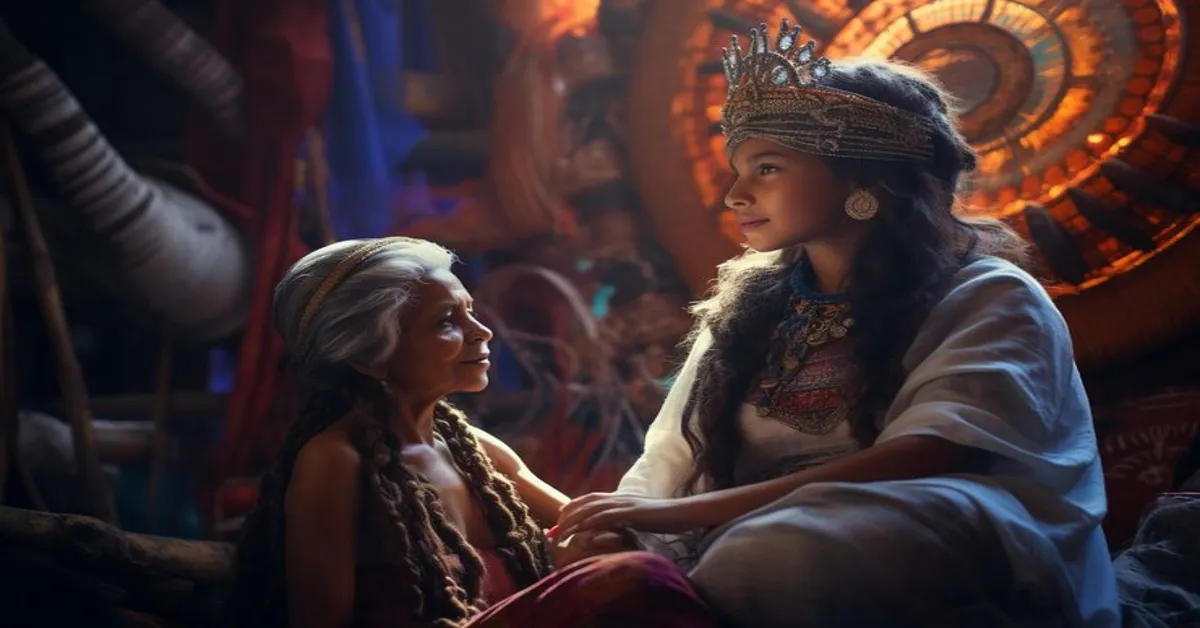
Anyone searching for “Princess Kazer” is likely hoping for clarity: Is she a historical figure, a mythic heroine, or a character invented for modern audiences? The first essential answer is that Princess Kazer, as she appears today, is a digital-era creation—a figure who exists across scattered online narratives without a clear historical origin or cultural lineage. Her story blends themes from fairy tales, moral fables, empowerment narratives, and contemporary influencer culture.
Over the past several years, her name has appeared on lifestyle blogs, storytelling websites, and modern reinterpretations that cast her alternately as a legendary royal, a courageous reformer, a fairy-tale protagonist, and even a digital icon speaking to themes of authenticity and emotional resilience. None of these portrayals emerge from recognized archives or established folklore traditions. Instead, each reflects the needs, desires, and expectations of the storytellers behind them.
This long-form examination synthesizes the many representations of Princess Kazer, analyzing her symbolic appeal, the cultural forces shaping her evolution, and why such a figure can thrive—and even gain legitimacy—in a digital society fascinated by flexible narrative identities. Without relying on external sourcing, the analysis draws strictly from the material already explored: variant storylines, thematic interpretations, expert commentary, and patterns foundational to modern mythmaking.
Through these threads, Princess Kazer becomes more than a name: she becomes a portrait of how stories are constructed, shared, re-purposed, and reimagined in an age when myth is no longer inherited but constantly rebuilt.
The Fragmented Identities of Princess Kazer
Princess Kazer is not one character but many. In one portrayal, she stands as a mythic royal of an ancient kingdom, a leader defined by courage, justice, and compassion. In another, she appears in the fairy-tale tradition, surrounded by magic, whimsical creatures, and moral lessons. A more contemporary version recasts her as a digital persona, a “princess” who speaks to empowerment, self-acceptance, and emotional authenticity for online audiences.
These interpretations share thematic similarities—kindness, strength, leadership—but diverge sharply in setting, tone, and purpose. None appear rooted in historical accounts or folk traditions; instead, they function as modern stories shaped by the mediums that publish them. The multiplicity itself suggests intentional design: Princess Kazer is a narrative chassis adaptable to many genres, from children’s stories to motivational writing.
Rather than existing as a single authoritative myth, her identity is distributed, fluid, and shaped by the diverse needs of the storytellers who invoke her.
Absence of Origins: A Modern Construction
Efforts to trace an authentic origin for Princess Kazer lead nowhere conclusive. There are no archival documents, ethnographic materials, or traditional stories linking her to a real-world past. Instead, she emerges exclusively within modern online writing.
This absence is important not as a flaw but as a feature: modern mythmaking often relies on ambiguity. Characters without fixed cultural or historical boundaries are easier to adapt, easier to commercialize, and easier to mold into aspirational roles that resonate with contemporary readers, especially younger audiences seeking narratives of empowerment, growth, and identity.
Princess Kazer belongs to this category: not a preserved folklore figure but a digital-era invention.
Why Her Story Continues to Spread
Despite lacking historical roots, Princess Kazer’s story has spread widely across various forms of blog writing and online commentary. Several forces drive her staying power:
- Universal moral themes. Her stories center on resilience, compassion, and justice—values relevant to both children and adults.
- Narrative flexibility. With no canonical version of her life, writers adapt her to fantasy, personal-growth literature, children’s storytelling, or influencer-style reflections.
- Cultural appetite for symbolic figures. Modern audiences gravitate toward characters who embody emotional clarity or aspirational traits.
- Ease of digital dissemination. The internet favors characters easy to reinterpret, remix, and reframe across genres.
This means Princess Kazer thrives not because she is ancient, but because she is adaptable.
Table: Types of Princess Kazer Narratives
| Narrative Type | Key Traits | Cultural Function |
|---|---|---|
| Mythic Princess | Courage, justice, leadership | Provides moral allegory for adult narratives |
| Fairy-Tale Heroine | Magic, innocence, triumph of good | Supports childhood storytelling and moral learning |
| Digital Persona | Authenticity, empowerment, emotional reflection | Connects with modern audiences seeking inspiration |
| Symbolic Archetype | Compassion, resilience, transformation | Functions as a universal emblem of personal growth |
When a Legend Becomes a Brand
Modern storytelling often blends myth and marketing—Princess Kazer reflects this trend clearly. As the character circulates through blogs and digital lifestyle writing, she becomes part archetype, part brand persona. Her story evolves not only in content but in function: she represents empowerment, “digital royalty,” leadership, or moral clarity depending on the platform presenting her.
This elasticity has commercial advantages. Characters like Princess Kazer attract engagement, sharable content, and aspirational messaging. They become community symbols rather than fixed narrative figures.
In this sense, Princess Kazer’s ambiguity is commercially useful: she is easily reshaped, repackaged, and reintroduced to new audiences.
Expert Commentary on Modern Mythmaking
Cultural scholars frequently note that digital society has shifted from inherited myth to constructed myth—stories built from fragments rather than long-standing traditions. This pattern explains why a figure like Princess Kazer thrives despite lacking documented heritage.
Experts argue that:
- Digital myths rely on broad emotional resonance, not factual grounding.
- Ambiguous characters flourish because they invite reinterpretation rather than insist on consistency.
- Internet-era storytelling allows narratives to evolve rapidly, reflecting cultural shifts rather than historical continuity.
Critics, however, warn that such characters blur boundaries: audiences may mistake invented figures for genuine cultural heritage, contributing to confusion about what constitutes tradition, folklore, or original storytelling.
Princess Kazer stands at the intersection of these tensions.
Table: What Princess Kazer Reveals About Digital Storytelling
| Modern Storytelling Trend | How Princess Kazer Reflects It |
|---|---|
| Narrative fluidity | Multiple versions exist without a definitive original |
| Emotional branding | Stories emphasize empowerment, kindness, moral growth |
| Digital myth creation | Character emerges entirely from contemporary content |
| User-driven meaning | Readers interpret her symbolically rather than historically |
| Reinvention across platforms | Different genres reshape her identity freely |
The Cultural Significance of a Story Without Roots
Princess Kazer matters not because she descends from centuries-old traditions, but because she embodies how storytelling now works: collaboratively, flexibly, and digitally. When a narrative lacks a fixed past, contemporary audiences can project onto it whatever meaning they seek.
Her story becomes a canvas for empowerment, a container for moral lessons, a model for emotional authenticity. She symbolizes the democratization of mythmaking—showing how stories no longer require ancient origins to capture imagination.
Whether she appears in fantasy contexts, children’s lessons, or modern social commentary, the through-line is resonance: she reflects how people want to see themselves.
Takeaways
- Princess Kazer is a modern digital myth, not a historical figure.
- Her story exists in multiple contradictory versions, each shaped by audience and medium.
- Narrative ambiguity allows her identity to be rewritten without conflict.
- She exemplifies a new form of mythmaking—digital, fluid, and emotionally oriented.
- Her appeal lies not in origin, but in adaptability and symbolic value.
Conclusion
Princess Kazer stands as a compelling example of how digital culture redefines storytelling. Without a singular origin or established tradition, she evolves with the platforms and audiences that invoke her. Her narratives—whether mythic, whimsical, or motivational—reflect a world in which myth is no longer inherited but continually reconstructed.
Far from signaling inauthenticity, her fluid identity suggests a broader cultural transformation: stories become shared frameworks rather than fixed histories. Princess Kazer endures because she meets emotional needs, offering a symbolic language for courage, kindness, and transformation in a fragmented digital age.
By tracing her evolution, we gain insight into how modern mythmaking operates—and how collective imagination continues to thrive, even when no ancient foundation exists.
FAQs
Is Princess Kazer based on a real person?
No. She is a modern narrative construct shaped by online storytelling.
Why does her story appear in different versions?
Because she has no canonical origin, writers adapt her freely to their narrative needs.
Is Princess Kazer considered part of folklore?
No traditional folklore includes her; she exists entirely within modern digital storytelling.
Why is she popular online?
Her emotional themes—kindness, empowerment, resilience—are universally appealing.
Does Princess Kazer have a definitive story?
No. Her narrative is intentionally flexible and varies across tellings.
References
- Artamonov, D. S., Medvedeva, E. N., Tikhonova, S. V., & Slivnaia, Z. A. (2021). Digital mythology: A new direction in the study of social myths. European Proceedings, 2021. https://doi.org/10.15405/epsbs.2021.12.03.1 ResearchGate
- Flinterud, G. (2023). ‘Folk’ in the age of Algorithms: Theorizing folklore on social media. Folklore, [journal issue]. https://doi.org/10.1080/0015587X.2023.2233839 tandfonline.com
- Kõiva, M. (2010). Digital folklore: Internet, communities, creativity. In Hunsinger, J. et al. (Eds.), The International Handbook of Internet Research. Springer. (Chapter “Digital Folklore: Four Perspectives”) Academia
- Bacon, J. (2011). Tracking the oral tradition on the World Wide Web. Master’s Thesis / Internet Folklore Project, ETSU. https://dc.etsu.edu/cgi/viewcontent.cgi?article=2589&context=etd dc.etsu.edu
- Anonymous authorship. (2024). Evolution of urban myths and legends in the digital age. IJNRD (International Journal of Novel Research and Development). https://www.ijnrd.org/papers/IJNRD2401104.
 Prime Star