

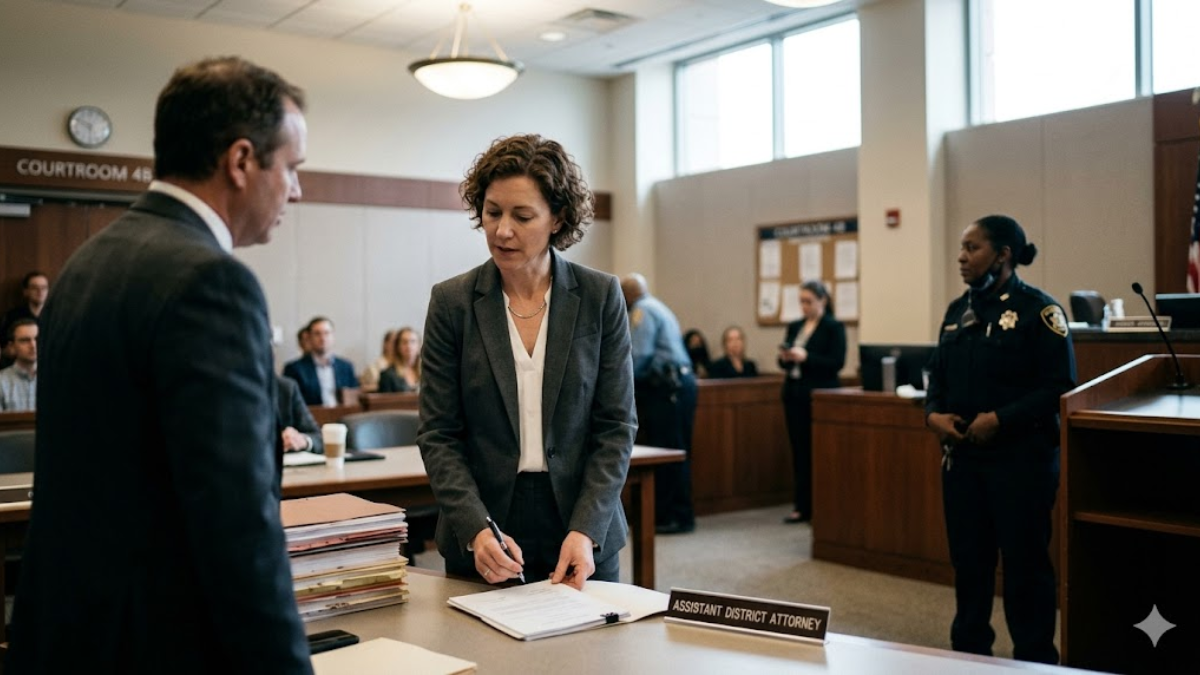
The term nolle prosecutor is often searched by people trying to understand why criminal charges suddenly disappear from court records or why a case gets dropped without a trial. In reality, this phrase is commonly used to refer to nolle prosequi, a powerful legal doctrine that allows prosecutors to discontinue a criminal case. Understanding nolle prosecutor decisions is essential if you are studying criminal justice or following a case where charges have unexpectedly been dismissed.
The concept of nolle prosequi meaning and prosecutorial discretion plays a central role in how justice systems decide which cases move forward and which do not. While it may seem confusing or even unfair at times, this mechanism exists to ensure that courts only proceed with cases that have sufficient evidence and public interest.
By the end of this article, you will understand exactly how a nolle prosecutor decision works, why prosecutors use it, what it means for defendants, and how it impacts criminal justice outcomes. You will also learn real-world applications, common misunderstandings, and step-by-step insights into how cases are dismissed under this legal principle.
Key Takeaways
- A nolle prosecutor decision typically refers to nolle prosequi, meaning the prosecutor chooses to stop pursuing charges.
- It does not always mean the defendant is declared innocent; it simply means the case will not continue.
- Prosecutors use this power based on evidence strength, legal strategy, or public interest considerations.
- A case dismissed through nolle prosecutor action may sometimes be refiled later depending on jurisdiction rules.
- Understanding this concept is crucial for interpreting criminal case dismissal outcomes accurately.
What is nolle prosecutor? / Why nolle prosecutor Matters
The term nolle prosecutor is an informal or mistaken variation of the legal term nolle prosequi, which is Latin for “to be unwilling to pursue.” In legal practice, it refers to a formal declaration made by a prosecutor stating that they will no longer proceed with criminal charges against a defendant.
A nolle prosecutor decision is not a judicial ruling but a prosecutorial action. This means the judge does not decide the outcome; instead, the prosecution voluntarily withdraws from the case. The result is usually a court case termination, although the legal status of the charges depends on jurisdiction rules.
This concept matters because it sits at the intersection of justice efficiency and fairness. Prosecutors must constantly evaluate whether a case is strong enough to proceed to trial. When evidence is insufficient, witnesses are unavailable, or continuing the case is not in the public interest, a nolle prosecutor decision becomes a practical solution.
In modern criminal justice systems, this mechanism helps prevent wrongful convictions and reduces unnecessary court congestion. However, it also raises questions about transparency and accountability in prosecutorial discretion, especially in high-profile or politically sensitive cases.
Legal Foundations of nolle prosecutor
To fully understand nolle prosecutor decisions, it is important to explore their legal foundation. The doctrine originates from common law systems, particularly English law, and has been adopted widely in jurisdictions such as the United States.
At its core, the principle is tied to prosecutorial discretion, which gives prosecutors the authority to decide whether to initiate, continue, or terminate criminal proceedings. This discretion is essential because prosecutors act as gatekeepers of the criminal justice system.
In practice, a nolle prosecutor decision may occur at any stage of the proceedings before final judgment. For example, a prosecutor may file charges, begin pre-trial discovery, and later determine that evidence has weakened or new facts have emerged that make prosecution unsustainable.
Courts generally respect this decision because prosecutors represent the state and are assumed to act in the public interest. However, judicial oversight may still exist in some jurisdictions to ensure that dismissals are not abused or politically motivated.
From a procedural standpoint, once a nolle prosequi motion is entered, the case is removed from the active docket. This does not always prevent future prosecution, but it effectively ends the current legal action.
The charges dropped process under this doctrine is therefore not a verdict of innocence but a strategic legal withdrawal. This distinction is critical in understanding criminal records and legal reporting.
Real-World Applications and Case Dynamics
In real-world legal systems, nolle prosecutor decisions are far more common than most people realize. Prosecutors frequently reassess cases as new evidence emerges, especially during discovery phases.
For instance, witness credibility issues often trigger a nolle prosecutor action. If a key witness becomes unavailable, changes testimony, or is found unreliable, continuing the prosecution may no longer meet the standard of “beyond a reasonable doubt.”
Another common scenario involves plea negotiations. Sometimes, prosecutors file multiple charges initially and later drop some of them through nolle prosequi to reach a negotiated plea agreement. This helps streamline court proceedings and ensures some level of accountability without a full trial.
In certain cases, law enforcement errors—such as improper evidence collection or constitutional violations—can also lead to dismissal. If evidence is ruled inadmissible, the prosecution may decide that continuing the case is not viable.
The impact of a nolle prosecutor decision varies depending on jurisdiction. In some legal systems, charges can be refiled if new evidence appears, while in others, dismissal may be effectively permanent. This variability makes it essential for defendants and legal professionals to understand local procedural rules.
Overall, these real-world applications demonstrate that nolle prosecutor decisions are not arbitrary but are instead rooted in practical legal evaluation and resource management.
What Most Legal Articles Fail to Explain
Most online explanations of nolle prosecutor focus only on the definition and basic implications. However, they often fail to address the deeper strategic role this doctrine plays in modern prosecution systems.
One overlooked aspect is how nolle prosecutor decisions influence case prioritization. Prosecutors manage heavy caseloads, and dropping weaker cases allows them to allocate resources toward higher-priority prosecutions. This creates an internal hierarchy of justice that is rarely discussed in simplified legal guides.
Another missing dimension is the psychological and reputational impact on defendants. Even though a case is dismissed, the existence of prior charges can still affect employment, immigration status, or public perception. The legal system may treat the case as closed, but society often does not.
Additionally, few explanations address the strategic use of nolle prosecutor decisions in shaping legal precedent indirectly. By choosing not to pursue certain cases, prosecutors can influence how laws are effectively enforced without changing the law itself.
Finally, there is an important procedural nuance: in some jurisdictions, a nolle prosecutor decision requires court approval, while in others it is purely administrative. This variation significantly affects how powerful prosecutors actually are within different legal systems.
Understanding these deeper layers reveals that nolle prosecutor is not just a procedural term but a key instrument of legal system management.
How-To: Understanding a nolle prosecutor Case Step-by-Step
- First, criminal charges are filed based on initial evidence collected by law enforcement. At this stage, the case enters the judicial system and is assigned to a prosecutor.
- The prosecutor reviews the evidence in detail, assessing whether it meets the legal threshold required for trial. This includes examining witness statements, forensic data, and procedural compliance.
- If weaknesses are identified, the prosecutor may reconsider the viability of the case. This is where prosecutorial discretion becomes a critical decision-making tool.
- The prosecutor may then file a formal nolle prosequi motion or administrative notice, depending on jurisdiction rules, signaling intent to discontinue prosecution.
- The court acknowledges the filing, and the case is officially removed from the active docket, resulting in court case termination for the current proceedings.
- After dismissal, legal consequences vary. In some jurisdictions, the defendant may be fully released from further prosecution on the same charges, while in others, the case may remain eligible for refiling.
- The defendant’s legal record may still show the arrest or charge history, even though the case was dismissed, which is an important distinction in background checks.
- Finally, the legal system updates its records to reflect the outcome, closing the case unless further action is legally justified.
Common Mistakes / Myths / Misconceptions
One common misconception is that a nolle prosecutor decision means the defendant is proven innocent. In reality, it only means the prosecution chose not to proceed. Innocence is not legally declared through this mechanism.
Another myth is that all nolle prosecutor decisions are permanent. In fact, many jurisdictions allow cases to be refiled if new evidence emerges or legal errors are corrected.
A third misunderstanding is that judges decide these dismissals. While courts may acknowledge the decision, it is primarily a prosecutorial action, not a judicial verdict.
Some also assume that a dismissed case disappears completely from records. However, in most systems, arrest and charge records remain accessible for background checks unless specifically expunged.
Lastly, people often believe that a nolle prosecutor decision indicates weak law enforcement. In reality, it is often a sign of responsible legal screening and efficient use of judicial resources.
Expert Tips / Best Practices
Legal experts emphasize that understanding nolle prosecutor decisions requires looking at the broader framework of prosecutorial ethics and accountability. According to resources such as Cornell Law School’s Legal Information Institute (https://www.law.cornell.edu), prosecutorial discretion is a foundational principle in common law justice systems.
One best practice in legal analysis is to always differentiate between dismissal types. Not all dismissals are equal—some are procedural, others are evidentiary, and nolle prosecutor falls into a discretionary category.
Another important insight is that transparency in dismissal decisions strengthens public trust. Jurisdictions with clear documentation policies for criminal case dismissal outcomes tend to have higher confidence in judicial fairness.
Legal professionals also recommend reviewing whether dismissals are with or without prejudice, as this determines whether a case can be reopened later.
Finally, consistent judicial oversight ensures that prosecutorial discretion is exercised fairly, balancing efficiency with justice integrity.
Conclusion
The concept of nolle prosecutor plays a critical role in modern criminal justice systems by allowing prosecutors to discontinue cases that are no longer viable or appropriate to pursue. While often misunderstood, it is a procedural tool rooted in efficiency, fairness, and legal strategy.
Understanding how nolle prosecutor decisions work helps you interpret court outcomes more accurately and recognize the difference between dismissal and acquittal. It also highlights the importance of prosecutorial discretion in shaping justice outcomes.
Ultimately, this doctrine ensures that legal systems remain functional and focused on cases that truly merit judicial attention. If you want to explore more legal breakdowns like this, continue reading related criminal law guides to deepen your understanding of how justice systems operate in practice.
Frequently Asked Questions
1. What does nolle prosecutor mean in simple terms?
A nolle prosecutor decision means the prosecutor decides not to continue with the criminal case. It is not a trial verdict and does not declare guilt or innocence. Instead, it simply ends the current prosecution based on legal or practical considerations.
2. Is a nolle prosecutor the same as a dismissal?
Yes, it is a form of criminal case dismissal, but it is specifically initiated by the prosecutor rather than the judge. It often reflects a strategic decision based on evidence strength or resource allocation.
3. Can charges be refiled after a nolle prosecutor decision?
In many jurisdictions, yes. If new evidence appears, prosecutors may refile the case unless the dismissal was entered with prejudice, which permanently bars re-prosecution.
4. Does nolle prosecutor mean the person is innocent?
No, it does not establish innocence. It simply means the prosecution has chosen not to pursue the case further at that time.
5. Why would prosecutors use nolle prosecutor instead of going to trial?
Prosecutors may use it when evidence is insufficient, witnesses are unavailable, or continuing the case is not in the public interest. It is part of efficient prosecutorial discretion.